Toddler Bedtime Routine: A Calm 7-Day Reset Plan
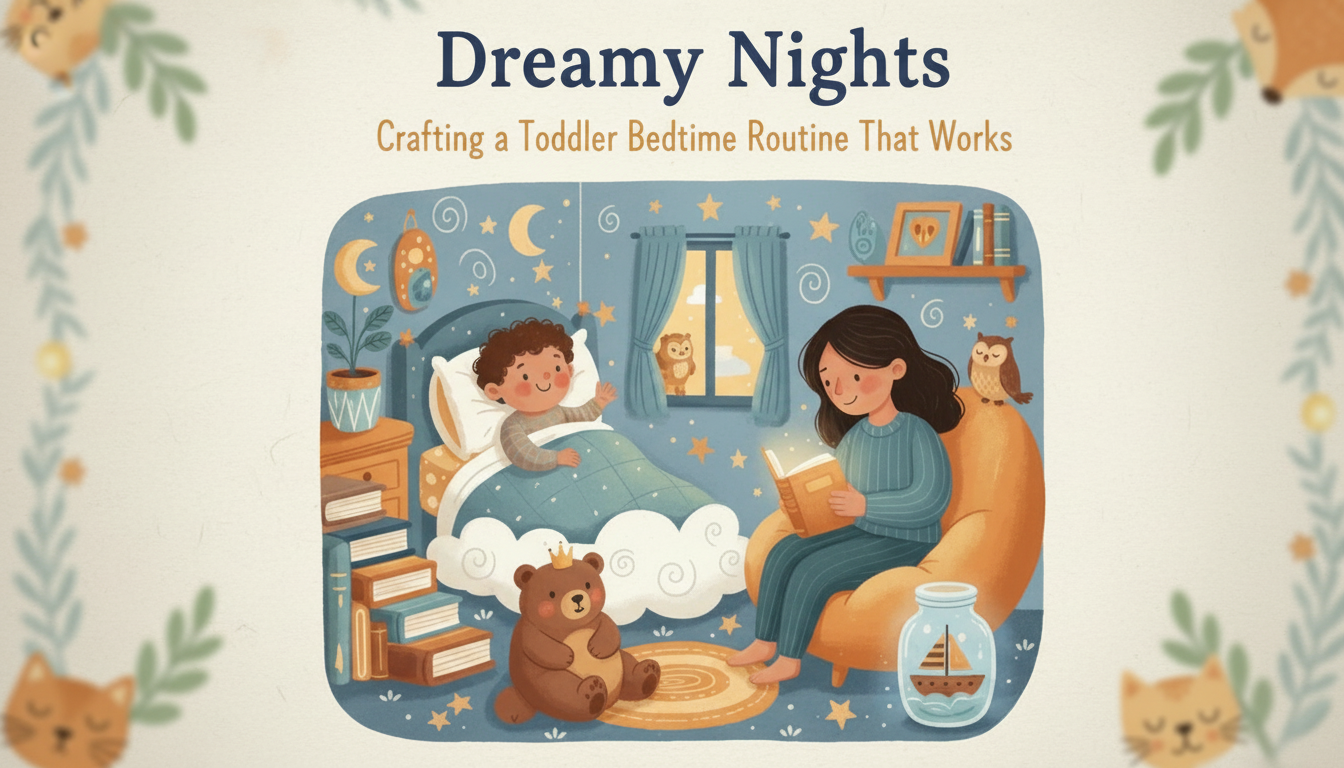
Dreamy Nights: Crafting a Toddler Bedtime Routine That Works
A predictable bedtime routine can reduce power struggles, shorten the time it takes to fall asleep, and help toddlers stay asleep longer. The routines that hold up best are simple enough to repeat every night: a consistent schedule, calming cues, and gentle boundaries toddlers can understand and count on—even when they’re tired.
What Makes Toddler Sleep So Tricky
Toddler sleep challenges often show up right when a child’s brain is doing big things. Rapid development—new words, a bigger imagination, and separation anxiety—can peak at bedtime, when the house finally gets quiet and a toddler’s mind has room to roam.
Another common issue is limit testing. Toddlers test boundaries more when they’re tired, and inconsistent responses can accidentally teach stalling behaviors. If “one more book” sometimes works, it becomes a strategy—especially when a toddler’s nervous system is already revved up.
Overtiredness and undertiredness can look surprisingly similar: running, giggling, bouncing, or suddenly getting “wired.” The difference is what fixes it. Overtired kids usually need an earlier bedtime and a calmer runway. Undertired kids often need a schedule tweak—like a shorter nap or more awake time before bed.
Finally, sleep associations matter. Many toddlers want the same conditions at 2 a.m. that they had at 7:30 p.m. If bedtime always includes a parent lying next to them until they’re fully asleep, they may need that same setup after every natural night waking.
Set the Foundation: Timing, Environment, and Daytime Habits
Start with the anchor point: wake time. A consistent morning wake time helps set your toddler’s body clock so bedtime becomes less of a debate and more of a rhythm.
Next, aim for an age-appropriate total sleep amount (including naps). For general guidance on children’s sleep needs by age, the American Academy of Pediatrics and the CDC offer helpful overviews. Individual kids vary, but too much or too little daytime sleep often shows up as bedtime resistance or early waking.
Then build strong sleep cues: dim lights, quiet voices, and a short routine repeated in the same order. The order matters because it becomes a “map” your toddler can follow, even on hard nights.
Optimize the room for sleep: cool, dark, and quiet. Blackout curtains and steady white noise can help if your home has unpredictable light or sound. Also try to avoid common disruptors close to bed: big meals, roughhousing, and bright screens, which can make it harder for a toddler’s body to downshift.
A Simple, Repeatable 30–45 Minute Bedtime Routine
The goal is a routine that’s calming, predictable, and not easily expandable. Start with a clear transition: a “last call” for water/snack and a bathroom or diaper step before the routine begins. This reduces repeated requests later.
Keep the steps in the same order each night—something like: bath or wash-up, pajamas, brush teeth, two short books, cuddles, lights out. If your toddler uses a comfort object (lovey or blanket), keep it consistent and keep it in bed—never as a bargaining tool (“You can have it if you stop crying”).
End with a brief, repeatable script that signals completion. For example: “I love you. You’re safe. It’s time to sleep. Goodnight.” The shorter and more consistent the phrase, the easier it is for your toddler to recognize the finish line.
Most importantly: don’t add new steps during protests. When a toddler learns that crying adds steps (extra songs, extra snacks, extra games), the routine naturally grows longer over time.
Sample Bedtime Routine Timeline (Adjust to Fit Your Home)
| Step | Goal | Example Time Block |
|---|---|---|
| Wind-down transition | Signal that bedtime is starting; reduce negotiation | T-45 minutes |
| Bath or wash-up | Relaxation cue; consistent sensory shift | T-40 to T-25 |
| Pajamas + teeth | Hygiene + “ready for bed” cue | T-25 to T-15 |
| Books (1–2) | Connection without overstimulation | T-15 to T-7 |
| Cuddles + script | Brief reassurance; predictable ending | T-7 to T-3 |
| Lights out | Independent settling begins | T-0 |
Gentle Sleep Training Tools That Preserve Connection
Gentle methods work best when you choose one approach and stick with it for 1–2 weeks before judging results. Switching nightly can keep toddlers guessing—and keep you exhausted.
Handling Common Toddler Bedtime Battles
A 7-Day Reset Plan (Small Changes, Big Consistency)
When Extra Guidance Helps
Recommended Picks (In Stock)
- Dreamy Nights: Crafting a Toddler Bedtime Routine That Works (eBook) — A clear routine framework plus gentle training tools designed around toddler behavior and consistency across caregivers.
- Baby Girls Cute Sleeveless Cotton Bodysuit — A comfortable, simple clothing staple that can make evening and morning changes quicker and less fussy.
- NIKE Swim Men’s Black Drawstring Swim Trunks – Spring/Summer Essential — Handy for pool days that burn energy earlier, helping protect a calmer bedtime later.
FAQ
How long should a toddler bedtime routine be?
Typically 20–45 minutes—long enough to connect and calm down, short enough to repeat consistently. If the routine keeps stretching due to stalling, trim steps and set limits upfront (like two books).
What time should toddlers go to bed?
A common range is roughly 7:00–8:30 p.m., depending on wake time and nap length. Consistency matters more than a perfect clock time, and frequent meltdowns or “wired” energy can be a sign bedtime needs to move earlier.
Is gentle sleep training the same as letting a toddler cry it out?
No. Gentle approaches focus on gradual changes with caregiver presence or brief check-ins; some protest can still happen, but your response stays calm, predictable, and consistent.










Leave a comment